The Future of Autonomous Vehicles: AI in Transportation
The landscape of transportation is undergoing a seismic shift. With artificial intelligence (AI) at the helm, autonomous vehicles are poised to redefine how people and goods move across towns, cities, and continents. While the concept of self-driving cars once belonged to the pages of science fiction, it is now fast becoming reality. According to a 2023 report from Allied Market Research, the global autonomous vehicle market is expected to reach $2.16 trillion by 2030, registering a staggering compound annual growth rate (CAGR) of 40.1% from 2023 to 2030. But this transformation is about much more than just driverless cars—it’s an AI-powered revolution in the very fabric of transportation.
This article explores how AI is shaping the future of autonomous vehicles, delving into the technology behind them, their impact on safety and efficiency, the challenges ahead, and what this means for society and the economy.
How AI Powers Autonomous Vehicles
At the core of every autonomous vehicle is an intricate web of AI algorithms and machine learning models. Unlike traditional vehicles, which rely solely on human drivers, autonomous vehicles interpret and navigate the world by processing vast streams of data from sensors, cameras, radar, and lidar systems.
.png)
AI systems in autonomous vehicles perform several critical functions:
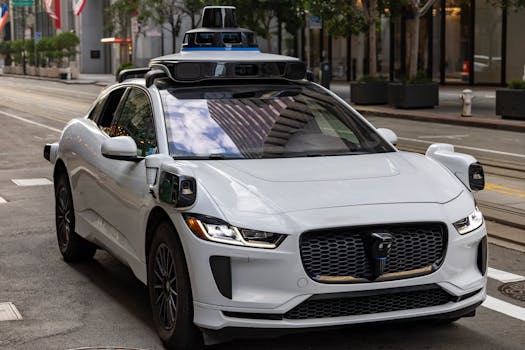
- $1 AI-powered perception systems identify objects, pedestrians, other vehicles, traffic signs, and lane markings. For example, Tesla’s Autopilot uses neural networks trained on over 3 billion miles of real-world driving data. - $1 Autonomous vehicles use high-definition maps and GPS data, continuously updated by AI to determine their exact location—down to a few centimeters’ accuracy. - $1 Sophisticated algorithms predict the behavior of other road users and plan safe, efficient routes in real time. - $1 AI makes split-second decisions to accelerate, brake, and steer the vehicle.The synergy between sensors and AI is crucial. For instance, Waymo’s self-driving cars use a combination of lidar (measuring distances with laser light), radar, and vision-based systems, all interpreted by AI to create a dynamic, real-time model of the vehicle’s surroundings.
AI-Driven Safety: Reducing Accidents and Saving Lives
One of the most compelling promises of autonomous vehicles is their potential to drastically reduce traffic accidents. Human error is responsible for 94% of serious crashes, according to the U.S. National Highway Traffic Safety Administration (NHTSA). AI, by contrast, does not get distracted, fatigued, or impaired.
AI-powered vehicles can:
- Detect and respond to hazards faster than humans. For example, NVIDIA’s Drive platform can process up to 254 trillion operations per second, allowing rapid decision-making. - Communicate with other vehicles and infrastructure (V2X communication), enabling coordinated maneuvers and early warnings about road conditions or emergencies. - Continuously learn from real-world data, improving their performance over time.A 2022 study by the Insurance Institute for Highway Safety (IIHS) estimated that widespread adoption of autonomous vehicles could prevent up to 33,000 fatalities per year in the United States alone.
Autonomous Vehicles and Urban Mobility: The Smart City Connection
AI-driven autonomous vehicles are not just poised to change individual car ownership—they’re set to transform entire urban mobility ecosystems. As cities grow, congestion, pollution, and inefficient public transportation become urgent problems. Here’s how AI and autonomous vehicles could address these challenges:
- $1 Companies like Cruise and Waymo are piloting robotaxi services in cities like San Francisco and Phoenix. These services could reduce the number of privately owned vehicles, lowering congestion and freeing up parking spaces. - $1 AI can optimize routes and schedules for autonomous shuttles that connect neighborhoods with major transit hubs, solving the “first mile/last mile” problem. - $1 With AI optimizing driving patterns and facilitating the use of electric autonomous vehicles, emissions could be cut significantly. A 2022 study by the International Transport Forum found that a switch to autonomous shared vehicles could reduce urban CO2 emissions by up to 60%.Here’s a comparison of conventional, human-driven vehicles with AI-powered autonomous vehicles in terms of urban mobility:
| Feature | Human-Driven Vehicles | Autonomous Vehicles (AI-powered) |
|---|---|---|
| Accident Rate | High (94% due to human error) | Expected to be much lower |
| Traffic Congestion | High during peak hours | Reduced by optimized routing |
| Parking Space Needed | Significant urban space used | Less, due to shared fleets |
| CO2 Emissions | Higher (fossil fuel usage, inefficient driving) | Lower (optimization, electrification) |
| Accessibility | Limited for non-drivers | Improved mobility for all |
Challenges on the Road to Full Autonomy
Despite remarkable progress, several formidable obstacles stand between today’s semi-autonomous vehicles and a future of fully self-driving cars.
1. $1 Adverse weather, complex urban environments, and rare “edge cases” (unusual or unexpected events) still challenge even the most advanced AI systems. For example, snow can obscure road markings, and unpredictable human behavior remains difficult to model. 2. $1 Governments worldwide are grappling with how to regulate autonomous vehicles. Standards for safety, liability, and data privacy are still evolving. In the European Union, new legislation on AI safety for vehicles is expected to be finalized by 2026. 3. $1 Autonomous vehicles are essentially computers on wheels, making them potential targets for hackers. Ensuring the security of vehicle software and data is a top concern. 4. $1 Surveys indicate that many people remain skeptical of self-driving technology. A 2023 AAA survey found that 68% of Americans are afraid to ride in a fully autonomous vehicle, underscoring the need for transparent safety records and consumer education. 5. $1 Autonomous vehicles may require new infrastructure: smart traffic signals, dedicated lanes, and enhanced digital mapping.The Economic and Social Impacts of AI in Transportation
The ripple effects of AI-driven autonomous vehicles will touch nearly every aspect of society and the economy.
- $1 While there are concerns about job losses for drivers, new roles are emerging in AI development, remote fleet supervision, cybersecurity, and vehicle maintenance. The World Economic Forum estimates that autonomous vehicles could create 15 million new jobs globally by 2035, even as 5 million driving jobs are displaced. - $1 For elderly people, people with disabilities, and those without driver’s licenses, autonomous vehicles promise unprecedented mobility and independence. - $1 AI-powered autonomous trucks are already being tested by companies like TuSimple and Aurora. In 2023, Aurora’s autonomous trucks completed over 40,000 miles on Texas highways, demonstrating the potential for round-the-clock freight delivery and reduced shipping costs. - $1 With fewer cars parked on city streets, valuable urban space can be repurposed for parks, housing, or businesses.What’s Next? The Roadmap for Autonomous Vehicles
The path to fully autonomous transportation is unfolding in stages, often defined by the Society of Automotive Engineers (SAE) levels of automation:
- $1 Driver assistance features like adaptive cruise control and lane-keeping (e.g., Tesla Autopilot, GM Super Cruise). - $1 The vehicle can drive itself in limited situations but still requires human intervention (e.g., Mercedes-Benz Drive Pilot, available in Germany as of 2023). - $1 No human intervention required in specific environments; Waymo’s robotaxis in Phoenix operate at this level. - $1 No steering wheel or pedals; the vehicle can drive anywhere, anytime.Most experts predict that widespread Level 4 deployment in urban areas will occur by 2030, with Level 5 autonomy following in the subsequent decade. The coming years will see more pilot programs, expanded regulatory frameworks, and growing public familiarity.
Driving Forward: The Lasting Impact of AI on Transportation
The future of autonomous vehicles, powered by AI, is not just about getting from point A to point B without a driver. It represents a profound transformation of both technology and society. With safer roads, cleaner air, and more accessible cities, the benefits are massive—but the journey will require addressing technological, regulatory, and social challenges.
As AI continues to learn and evolve, the vision of a world where transportation is safer, more efficient, and more inclusive is moving from possibility to inevitability. The next decade will be pivotal, with AI-driven vehicles not only changing how we travel, but also how we live and work.