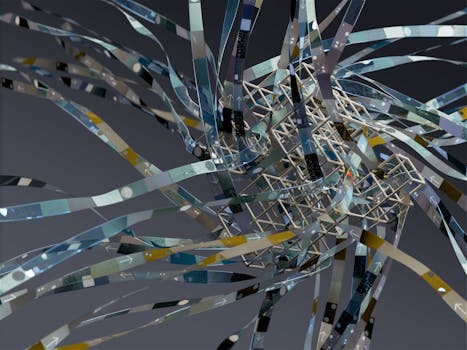
Artificial intelligence (AI) is rapidly transforming every facet of our lives, and the world of art and design is no exception. What was once the exclusive realm of human creativity is now a dynamic collaboration between artists, designers, and intelligent machines. From generating original artworks to assisting in design decisions, AI is reshaping creative processes in ways few could have imagined just a decade ago. But how exactly is AI influencing design and creativity? What opportunities and challenges does this new partnership bring? Let’s explore the profound ways AI is molding the future of art and design.
The Rise of AI-Assisted Creativity: A New Paradigm
AI’s influence on creative work began gaining momentum in the mid-2010s, as machine learning models became skilled at recognizing patterns, generating images, and even mimicking artistic styles. By 2023, the AI art market was valued at approximately $1.07 billion, and is projected to grow at a compound annual rate of 34.7% through 2030. Tools like DALL-E 2, Midjourney, and Adobe’s Sensei have introduced new workflows, making AI an indispensable collaborator in the creative process.
Rather than replacing human artists, AI often acts as a creative partner, offering suggestions, generating drafts, or exploring countless variations. For example, a graphic designer might use AI to quickly generate multiple logo concepts, refining the most promising ones by hand. Meanwhile, artists can experiment with AI-generated textures, color palettes, or entire compositions, dramatically speeding up the ideation phase.
.png)
Notable projects include “Edmond de Belamy,” the first AI-generated portrait to be auctioned at Christie’s, which sold for $432,500 in 2018. Since then, AI-generated art has found its way into galleries, advertising, fashion, and even album covers, illustrating a symbiotic relationship between human intuition and machine intelligence.
How AI Tools Are Changing the Design Workflow
The integration of AI into design workflows is not just a trend—it’s a revolution. Traditional design processes were often linear: research, sketch, iterate, finalize. With AI, designers can now blend ideation, iteration, and execution in real-time.
Here’s how AI is making a difference:
1. $1: AI-powered platforms like Canva’s Magic Design or Figma’s design suggestions can instantly generate layouts, color schemes, and visual elements based on a simple prompt or mood board. This allows designers to explore more options in less time. 2. $1: Tools like Runway ML and Adobe Firefly let designers rapidly prototype animations, graphics, and even 3D objects. For example, an AI tool can turn a rough sketch into a high-fidelity render within minutes. 3. $1: AI systems can analyze user data and generate personalized visuals or experiences. In branding, for example, AI can create hundreds of unique ad variants tailored to different audience segments—a feat impossible for a human team working manually. 4. $1: AI-driven tools can automatically generate alt text for images, suggest color combinations that meet accessibility standards, or translate visual content for users with disabilities. This widens the audience for creative work and ensures inclusivity. 5. $1: AI algorithms can catch design inconsistencies, flag low-contrast text, or optimize file sizes without sacrificing quality, saving designers hours of tedious work.AI in Artistic Expression: Creative Collaborations and New Mediums
AI’s role in art extends beyond mere efficiency—it is also inspiring new forms of expression. Artists are leveraging AI not just as a tool, but as a collaborator and even a muse. This has given rise to an exciting new genre known as “generative art,” where algorithms and neural networks help to create complex, unpredictable patterns and imagery.
Here are a few ways AI is influencing artistic creativity:
- $1: AI models can blend the styles of famous artists with new photographs or sketches. For instance, a portrait can be reimagined in the style of Van Gogh or Picasso, allowing artists to experiment with visual languages at the click of a button. - $1: AI-powered tools like AIVA and Amper Music can compose original melodies or soundscapes, which musicians can then refine and incorporate into their work. - $1: Artists such as Refik Anadol use AI to create immersive digital installations that respond to audience movement or real-time data streams, turning art into a dynamic, evolving experience. - $1: In 2022, the art collective Obvious collaborated with AI to create a series of portraits based on historical datasets, blending human curation with machine learning creativity.AI’s ability to process vast datasets enables artists to work with scales and complexities that would be otherwise unimaginable. For example, the “Unfinished Symphony” project used AI to analyze Beethoven’s work and complete his unfinished 10th symphony, blending historical tradition with futuristic computation.
Comparing Human and AI-Driven Creative Processes
To better understand the influence of AI on design and art, it’s helpful to compare traditional (human-centered) and AI-augmented creative processes. Below is an overview highlighting key differences:
| Aspect | Human-Driven Creativity | AI-Augmented Creativity |
|---|---|---|
| Ideation Speed | Slower, relies on personal experience and manual research | Rapid, generates dozens of ideas in seconds |
| Volume of Output | Limited by time and energy | Can produce hundreds or thousands of variants |
| Originality | Deeply personal, influenced by culture and emotions | Draws from vast datasets, sometimes results in unexpected combinations |
| Technical Skill Required | Years of training often needed | Lower barrier; non-experts can create high-quality work |
| Personal Touch | Strong; reflects the artist’s unique perspective | Varies; can lack human nuance unless guided |
| Accessibility | May require expensive tools or training | Democratizes creation, accessible via cloud-based apps |
This comparison highlights that while AI accelerates and expands creative possibilities, the human element remains crucial for meaning, context, and emotional resonance.
The Ethical and Philosophical Dimensions of AI in Art
As AI becomes more deeply embedded in creative processes, artists, designers, and audiences are grappling with new ethical and philosophical questions. Who owns AI-generated art? How do we define originality when machines remix existing works? And can a machine truly be creative?
- $1: In 2023, the U.S. Copyright Office clarified that works created solely by AI are not eligible for copyright. However, artworks created through human-AI collaboration may qualify, depending on the degree of human input. This gray area is leading to ongoing legal debates and policy development worldwide. - $1: Because AI is trained on historical data, it can perpetuate or amplify biases present in its training sets. Artists and designers must be vigilant, ensuring their work does not unintentionally reinforce stereotypes or exclusion. - $1: While some fear that AI could replace creative professionals, a 2022 survey by Adobe found that 62% of designers see AI as a way to enhance, not replace, their work. Many new roles are emerging, such as prompt engineering and AI curation, requiring a blend of technical and creative skills. - $1: Some critics argue that AI-generated art lacks the emotional depth and intentionality of human-made works. However, others see AI as a medium through which artists can explore new facets of creativity, using algorithms as tools of self-expression.Real-World Examples: AI Empowering Artists and Designers
AI’s impact is not just theoretical—it is visible in real-world projects across the globe. Here are some compelling examples:
- $1: In 2016, a team of data scientists and art historians used AI to analyze Rembrandt’s paintings and create a new, “authentic” Rembrandt work. The result was a 3D-printed canvas that mimicked the Dutch master’s style in striking detail. - $1: Fashion brands like Tommy Hilfiger and H&M are using AI to predict trends, generate new patterns, and even design entire collections. In 2022, the AI-designed “Dress of the Future” by designer Anouk Wipprecht integrated biosensors and responsive lighting, showcasing the fusion of technology and haute couture. - $1: Pixar and Netflix have embraced AI to streamline animation workflows, automate background generation, and even suggest story elements based on audience preferences. - $1: In cities like London and Tokyo, AI-generated murals and public art installations are transforming urban landscapes, inviting citizens to interact with art in new and unexpected ways.These examples underscore AI’s potential to democratize creativity, allowing more people to participate in the design process and pushing the boundaries of what’s possible.
What the Future Holds for AI and Creativity in Art
As AI technologies continue to evolve, their influence on art and design will only grow deeper and more complex. By 2025, it’s expected that over 50% of design professionals will regularly use AI-powered tools. This shift promises not just increased productivity, but also the emergence of entirely new art forms and creative industries.
Yet, the future will not be without its challenges. Artists and designers will need to balance the efficiency and power of AI with the irreplaceable value of human vision, emotion, and context. Ethical considerations and new frameworks for collaboration will be critical to ensure that creativity remains accessible, inclusive, and authentic.
Ultimately, the fusion of AI and human creativity is not a zero-sum game. Instead, it promises a renaissance where technology amplifies, rather than diminishes, the human spirit of invention.