Artificial intelligence (AI) is rapidly transforming the landscape of healthcare and disease diagnostics. From streamlining administrative tasks to enhancing the accuracy of medical imaging, AI’s influence is reshaping how doctors detect, diagnose, and treat illnesses. As the global burden of chronic diseases rises and healthcare systems face increasing pressure, the integration of AI is not just a technological upgrade—it’s a vital step toward more efficient, personalized, and accessible healthcare for all.
In this article, we’ll explore how AI is improving healthcare and disease diagnostics through real-world applications, specific breakthroughs, and data-driven comparisons. We’ll examine how AI is revolutionizing early disease detection, enabling precision medicine, speeding up drug discovery, and reducing diagnostic errors. Whether you’re a patient, healthcare professional, or simply curious about emerging technologies, understanding the impact and potential of AI in healthcare is essential.
The Growing Need for AI in Healthcare Diagnostics
Modern healthcare faces significant challenges: an aging global population, a shortage of medical professionals, and a surge in chronic diseases like diabetes, cancer, and heart disease. According to the World Health Organization, noncommunicable diseases account for 74% of all deaths worldwide, with early diagnosis being a key factor in improving outcomes.
.png)
However, traditional diagnostic methods often involve time-consuming manual processes and are subject to human error. For example, studies suggest that up to 12 million adults in the U.S. experience diagnostic errors annually, leading to delayed or incorrect treatments. The growing volume of medical data—from electronic health records to imaging scans—can overwhelm clinicians and increase the risk of oversight.
AI technologies, including machine learning and deep learning, are designed to process vast amounts of data quickly and accurately. By automating repetitive tasks and uncovering subtle patterns in complex datasets, AI is uniquely positioned to enhance diagnostic accuracy, efficiency, and patient care.
AI-Powered Medical Imaging: Transforming Early Detection
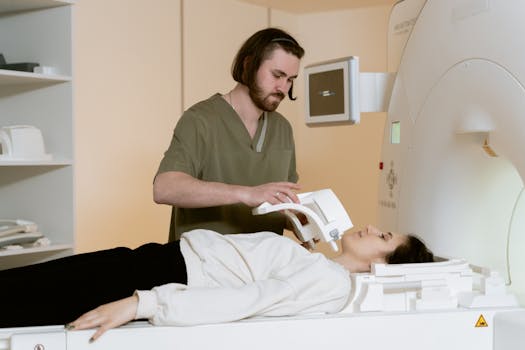
Medical imaging is one of the most prominent fields where AI is making a profound impact. Techniques like X-rays, CT scans, and MRIs are essential for diagnosing diseases ranging from cancer to neurological disorders. However, interpreting these images requires years of training and expertise.
AI algorithms, particularly those based on deep learning, can analyze medical images with remarkable speed and precision. For example, a 2020 study published in Nature reported that an AI system developed by Google Health could detect breast cancer in mammograms with an accuracy that surpassed experienced radiologists. The AI reduced false positives by 5.7% and false negatives by 9.4% compared to human readers.
Similarly, AI-powered tools are now used to:
- Detect lung nodules in chest CT scans, aiding early lung cancer diagnosis. - Identify signs of diabetic retinopathy in retinal images, helping prevent blindness. - Spot stroke indicators in brain scans within seconds, enabling faster treatment.The following table compares traditional imaging diagnostics with AI-assisted methods:
| Aspect | Traditional Diagnostic | AI-Assisted Diagnostic |
|---|---|---|
| Diagnostic Speed | Minutes to hours per scan | Seconds to minutes per scan |
| Accuracy (example: breast cancer detection) | Varies; up to 10% false negatives | Reduces false negatives by 9-10% |
| Scalability | Limited by specialist availability | Can process thousands of scans daily |
| Cost Implications | Higher, due to manual labor | Potentially lower, due to automation |
These advances not only improve diagnostic speed and accuracy but also help address shortages of medical specialists, particularly in underserved regions.
Enabling Precision Medicine with AI-Driven Insights
Precision medicine aims to tailor treatments to individual patients based on their genetic, environmental, and lifestyle factors. However, extracting actionable insights from the vast amounts of patient data required for precision medicine is a daunting task.
AI excels at analyzing complex, high-dimensional data. Machine learning models can sift through genetic sequences, lab results, and patient histories to uncover patterns that predict disease risk or treatment response. For instance:
- In oncology, AI algorithms can analyze tumor genetics to identify mutations that may respond to specific targeted therapies. - In cardiology, AI systems use patient data to predict the risk of heart attacks or strokes, enabling proactive interventions. - For rare diseases, AI tools like Face2Gene use facial recognition and genomic data to assist clinicians in diagnosing conditions that might otherwise go unrecognized.A notable example is IBM Watson for Oncology, which analyzes patient records and medical literature to suggest personalized cancer treatment options. In clinical trials, Watson was able to match patients with appropriate therapies in 96% of cases—significantly faster than traditional manual methods.
AI-driven precision medicine not only improves patient outcomes but also reduces trial-and-error prescribing, healthcare costs, and the risk of adverse drug reactions.
Accelerating Drug Discovery and Development with AI
Developing a new drug is an expensive and time-consuming process, often taking over a decade and costing $1-2 billion from discovery to market. The COVID-19 pandemic underscored the urgent need for faster, more efficient drug development pipelines.
AI is revolutionizing drug discovery in several key ways:
- Predicting which chemical compounds are most likely to be effective against a target disease. - Simulating how drugs interact with the human body to anticipate efficacy and side effects. - Identifying new uses for existing medications (drug repurposing).For example, in 2020, British AI firm BenevolentAI identified baricitinib—an existing arthritis drug—as a potential treatment for COVID-19, leading to clinical trials within weeks. Similarly, Insilico Medicine used AI to design a novel drug candidate for fibrosis in just 46 days—a process that typically takes months or years.
The application of AI in drug development not only saves time and money but also has the potential to bring life-saving therapies to patients much faster.
Reducing Diagnostic Errors and Improving Patient Safety
Diagnostic errors are a significant cause of harm in healthcare. According to a 2015 report from the National Academy of Medicine, diagnostic errors contribute to approximately 10% of patient deaths in the United States. AI’s ability to systematically analyze medical data and flag anomalies can help mitigate these risks.
Some AI-powered clinical decision support systems are now integrated into electronic health records (EHRs) to:
- Alert clinicians to potential drug interactions or allergies. - Suggest additional tests or follow-up actions based on patient data. - Flag abnormal lab results that may be overlooked in busy clinical settings.A 2022 study published in JAMA Internal Medicine found that an AI-powered diagnostic tool reduced the rate of missed diagnoses by 37% in primary care settings. By offering a second opinion or confirmation, AI systems support clinicians and enhance patient safety.
Moreover, AI chatbots and virtual assistants, such as Babylon Health or Ada Health, are empowering patients to assess symptoms and seek care more effectively, reducing unnecessary visits and ensuring timely medical attention.
Ethical Considerations and Challenges of AI in Healthcare
Despite its promise, the adoption of AI in healthcare is not without challenges. Key concerns include:
- Data privacy: Medical data is highly sensitive, and breaches can have serious consequences. - Bias and fairness: AI models trained on unrepresentative data may perpetuate health disparities. - Transparency: Many AI algorithms, especially deep learning models, are "black boxes" with decisions that are difficult to interpret. - Regulation and validation: Ensuring the safety and efficacy of AI tools requires rigorous clinical validation and oversight.To address these issues, healthcare organizations and regulators are developing frameworks for ethical AI, including guidelines for data security, bias mitigation, and algorithm transparency. In 2021, the European Union proposed new regulations to govern AI in healthcare, emphasizing human oversight and accountability.
The Future of AI in Healthcare and Diagnostics
AI’s role in healthcare and disease diagnostics is rapidly expanding, with new breakthroughs emerging every year. By 2030, the global AI in healthcare market is projected to reach $194.4 billion, up from $11.1 billion in 2021, according to Grand View Research.
In the coming years, we can expect AI to:
- Further improve early disease detection, especially for hard-to-diagnose conditions. - Enable real-time, remote diagnostics through wearable devices and telemedicine. - Facilitate global health equity by providing AI-powered tools to low-resource settings. - Foster greater collaboration between humans and machines, enhancing—not replacing—medical expertise.Ultimately, AI is not a substitute for human judgment but a powerful tool to support clinicians, streamline healthcare delivery, and improve patient outcomes worldwide.