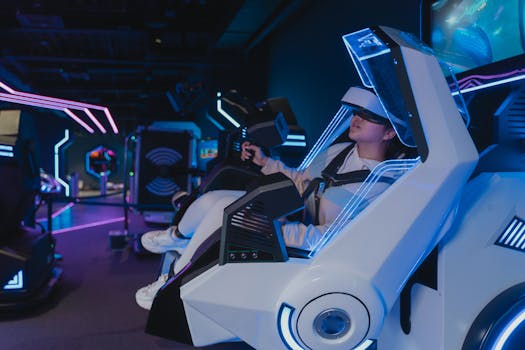
Artificial Intelligence (AI) has rapidly become an influential force across many industries, but nowhere is its impact more visible, creative, and dynamic than in the entertainment industry and the world of video games. From reshaping how movies are made and distributed to revolutionizing game design and player experiences, AI is not just a behind-the-scenes tool—it’s a transformative agent pushing the boundaries of imagination and engagement. This article explores the innovative ways AI is changing the face of entertainment and video games, underpinned by real-world examples, concrete statistics, and a deep dive into the future possibilities of this exciting intersection.
The New Age of Content Creation: AI-Generated Scripts, Music, and Art
One of the most groundbreaking applications of AI in entertainment is the creation of original content. Filmmakers, television studios, and even independent artists now harness AI to generate scripts, compose music, and produce visual effects.
AI scriptwriting tools like OpenAI’s GPT-4 and Sudowrite are being used by screenwriters to brainstorm plotlines, dialogue, and character development. For example, Warner Bros. has experimented with AI-driven script analysis to predict box office success, while Netflix uses AI to tailor content recommendations and even greenlight productions based on predicted viewer preferences.
.png)
In music, AI composers such as Amper Music and AIVA have written soundtracks for films, TV series, and commercials. In 2020, Huawei’s AI completed Schubert’s famous “Unfinished Symphony,” demonstrating that AI can blend seamlessly with human creativity.
Visual arts are also being revolutionized. AI tools like DALL-E and Midjourney can generate concept art for movies and video games in seconds, accelerating the pre-production phase. For instance, Ubisoft, a leading video game company, uses AI to design game environments, saving thousands of hours in manual labor.
This AI-driven content creation is not only boosting productivity but also opening doors for new forms of artistic expression and storytelling that were previously unimaginable.
Revolutionizing Video Game Design and Player Experience
The video game industry, projected to reach $321 billion by 2026 (according to PwC), is at the forefront of AI innovation. Modern games leverage AI to create more immersive, responsive, and personalized experiences for players.
Procedural content generation, powered by AI, allows developers to create vast, explorable worlds with minimal manual input. Games like “No Man’s Sky” use AI algorithms to generate billions of unique planets, each with its own flora, fauna, and terrain. This not only enriches gameplay but also extends replay value exponentially.
AI is also transforming non-player character (NPC) behavior. Instead of predictable, repetitive actions, AI-driven NPCs can learn, adapt, and respond dynamically to player choices. A prime example is “The Last of Us Part II,” where AI-controlled enemies coordinate tactics and call out to each other, enhancing realism and challenge.
Adaptive AI is being used to tailor difficulty levels and game narratives to individual players. For example, Ubisoft’s “Rainbow Six Siege” uses machine learning to detect cheating and adapt to new tactics, while “Left 4 Dead” features an AI “Director” that changes the pace and intensity of the game based on player performance.
These innovations result in deeper, more engaging gaming experiences that blur the line between scripted entertainment and interactive storytelling.
Personalization and Recommendation Engines: AI Curates Your Entertainment
With the explosion of streaming platforms and digital distribution channels, users are inundated with choices. AI-powered recommendation systems have become essential for helping viewers and gamers discover content tailored to their tastes.
Netflix’s recommendation engine, for instance, analyzes over 3,000 user interaction signals—ranging from watch time to pause behavior—to suggest what viewers are most likely to enjoy. This personalized curation is credited with keeping 80% of Netflix’s viewing activity within recommended content, according to the company.
In the world of video games, platforms like Steam use AI to recommend new titles based on a player’s library, playtime, and review activity. Spotify and YouTube similarly rely on deep learning algorithms to suggest new music and videos, ensuring users remain engaged and entertained.
This AI-driven personalization not only enhances user satisfaction but also drives revenue. A study by McKinsey found that 35% of Amazon’s revenue comes from AI-powered recommendations, illustrating the immense value of tailored content discovery.
AI-Driven Visual Effects and Virtual Production
The film and television industry has witnessed a revolution in visual effects (VFX) and computer-generated imagery (CGI), largely thanks to AI. Machine learning models can now automate complex tasks, reduce costs, and accelerate post-production timelines.
For example, Disney used AI-based de-aging and face-swapping technology in “The Mandalorian” to recreate a young Luke Skywalker with astonishing realism. Deepfake technology, while controversial, is being refined for legitimate applications in visual storytelling and historical recreations.
Virtual production, exemplified by the LED “Volume” stage used in “The Mandalorian,” combines real-time rendering with AI-driven camera tracking and lighting. This allows filmmakers to visualize completed scenes on set, reducing the need for expensive reshoots and post-production work.
AI is also making high-quality VFX accessible to independent creators. Tools like Adobe’s Sensei and Runway ML enable automatic rotoscoping, color grading, and object removal—tasks that previously required hours of manual labor.
This democratization of VFX is lowering barriers to entry and fueling a new wave of creativity in indie filmmaking and game development.
Challenges, Ethics, and the Future of AI in Entertainment
While the advantages of AI in entertainment are clear, there are important challenges and ethical considerations. Deepfakes, for example, raise concerns about misinformation, consent, and intellectual property rights. The Writers Guild of America (WGA) recently negotiated protections against AI-generated scripts replacing human writers, highlighting industry apprehensions.
Data privacy is another major issue. Recommendation engines and personalized content rely on massive amounts of user data, raising concerns about surveillance and algorithmic bias. According to a 2022 Pew Research Center survey, 72% of Americans are concerned about how companies use their personal data.
There’s also the question of creativity: Will AI stifle human originality or enhance it? Most experts agree that the best results come from collaboration, where AI augments human talent rather than replaces it.
Looking ahead, the continued integration of AI promises even more profound changes. Real-time AI translation could make entertainment global in ways never before possible; AI-powered virtual actors could star alongside humans; and completely personalized narratives could become the norm.
The table below summarizes some key areas where AI is transforming the entertainment industry and video games, highlighting examples and measurable impacts.
| Area of Impact | AI Application | Example | Measured Impact |
|---|---|---|---|
| Scriptwriting & Content Creation | AI-generated scripts, music, art | Netflix, Warner Bros., OpenAI | Reduced writing time by up to 30%, new creative formats |
| Game Design | Procedural world generation, adaptive NPCs | No Man’s Sky, The Last of Us Part II | Billions of unique game environments, higher player retention |
| Personalization | Recommendation engines | Netflix, Steam, Spotify | 80% content consumption from recommendations |
| Visual Effects | AI-based CGI, deepfakes, virtual production | The Mandalorian, Adobe Sensei | Up to 50% reduction in VFX costs, faster production cycles |
| Audience Engagement | Tailored narratives, dynamic gameplay | Left 4 Dead, Rainbow Six Siege | Longer playtimes, higher engagement rates |
AI's Profound Impact on Entertainment and Video Games
AI’s influence on the entertainment industry and video games is profound, multifaceted, and still unfolding. From automating labor-intensive processes and generating original content to personalizing experiences and enabling new forms of storytelling, AI is at the heart of a creative revolution.
Yet, these technological advances also bring ethical dilemmas and practical challenges, requiring careful navigation by creators, companies, and policymakers. The future will likely belong to those who can skillfully blend human ingenuity with AI’s vast capabilities, unlocking new possibilities while preserving the essential spark of human creativity.
Whether you’re a movie buff, a gamer, or a content creator, the next blockbuster, chart-topping game, or viral hit is increasingly likely to be shaped—if not co-created—by artificial intelligence.