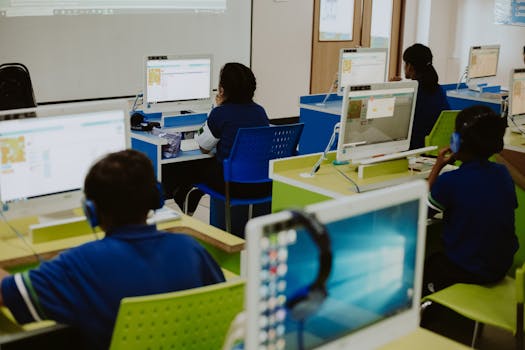
Artificial Intelligence (AI) is no longer a futuristic concept reserved for science fiction. It’s become a transformative force across countless sectors, and nowhere is this more apparent than in education. From personalized learning platforms to AI-driven administrative tools, schools around the globe are rapidly adopting advanced technologies. According to HolonIQ, global AI expenditure in education is projected to reach $6 billion by 2025, showcasing the seismic shift underway in how students learn and teachers teach. But how exactly is AI changing the way of education and learning in schools? Let’s explore the profound impacts, challenges, and possibilities of this digital revolution.
The Rise of Personalized Learning Powered by AI
One of the most significant advancements brought by AI is the rise of personalized learning experiences. Traditional classroom models often struggle to accommodate the varied learning speeds, styles, and interests of individual students. AI, however, offers a solution by analyzing student data and tailoring lesson plans accordingly.
For example, platforms like DreamBox Learning and Carnegie Learning use AI algorithms to track student progress in real-time, adapting questions and activities to each learner’s strengths and weaknesses. According to a RAND Corporation study, schools using personalized learning approaches saw math test scores improve by up to 20 percentile points compared to traditional methods.
.png)
Personalization goes beyond pacing; it can also include language preferences, multimedia content, and even the type of feedback provided. Students who need more time on certain subjects receive it, while those who advance quickly are presented with new challenges, making education more equitable and engaging for everyone.
AI-Powered Assessment and Feedback: Speed, Precision, and Insight
Assessment has always been a cornerstone of education, but traditional testing methods often provide limited insight into student understanding and can be time-consuming to administer and grade. AI is revolutionizing this process in several ways:
1. Automated Grading: AI tools like Gradescope and Turnitin can instantly evaluate multiple-choice, short-answer, and even some essay responses. This not only saves teachers countless hours but also ensures greater consistency and objectivity. 2. Data-Driven Feedback: AI systems can analyze patterns in student errors and provide targeted feedback. For instance, if a student consistently struggles with fractions, the system can recommend additional resources or practice problems in that specific area. 3. Predictive Analytics: By analyzing historical performance data, AI can identify students at risk of falling behind and alert educators early, enabling timely interventions.A 2022 report from the Center for Digital Education found that AI-powered assessments reduced grading time by up to 60% for teachers while improving feedback quality by providing instant, actionable suggestions.
Redefining the Teacher’s Role: From Lecturer to Facilitator
AI is not about replacing teachers; it’s about empowering them. With the automation of administrative tasks and basic content delivery, educators can spend more time focusing on what matters most: guiding, mentoring, and inspiring students.
Teachers can use AI-generated analytics to understand classroom dynamics, identify knowledge gaps, and customize instruction. For example, if a dashboard shows that 30% of students are struggling with a particular concept, the teacher can address it immediately rather than waiting for end-of-term test results.
Moreover, AI supports differentiated instruction by offering resources for students with special needs, such as real-time speech-to-text for hearing-impaired students or dynamic reading adjustments for those with dyslexia.
Making Learning Accessible and Inclusive
AI is also breaking down barriers to education for students who have historically been underserved. Adaptive technologies powered by AI can translate lessons into multiple languages, generate subtitles, or convert text into audio—making content more accessible for students with disabilities or language barriers.
Consider Microsoft’s Immersive Reader, which uses AI to help students with dyslexia improve reading comprehension. Or Google’s AI-powered translation tools, which allow non-native speakers to follow along in real-time. These innovations are crucial in diverse classrooms; for example, in the United States, nearly 10% of public school students are English language learners, according to the National Center for Education Statistics (NCES).
AI can also address equity issues by providing high-quality, scalable tutoring to students in under-resourced schools, leveling the academic playing field.
AI in School Administration: Efficiency and Strategic Decision-Making
Beyond the classroom, AI is streamlining school management and operations. Administrative tasks—from scheduling and record-keeping to resource allocation—are being optimized with AI-driven solutions. This means less time spent on paperwork and more on student-centered activities.
For instance, AI-powered scheduling software can automatically create timetables that minimize conflicts and maximize resource use. Chatbots handle routine inquiries from parents and students, freeing up office staff for more complex tasks.
AI can also support strategic planning through predictive analytics. By analyzing enrollment trends, academic performance, and resource utilization, school leaders can make data-driven decisions that improve educational outcomes and operational efficiency.
Comparing Traditional and AI-Enhanced Learning Environments
To better understand the transformative impact of AI in schools, let’s compare key aspects of traditional and AI-enhanced educational environments:
| Aspect | Traditional Learning | AI-Enhanced Learning |
|---|---|---|
| Instruction Style | One-size-fits-all, standardized | Personalized, adaptive to individual needs |
| Assessment | Manual grading, periodic feedback | Automated grading, real-time feedback |
| Accessibility | Limited support for diverse needs | AI-driven tools for language, disability, and learning support |
| Teacher Role | Mainly content delivery | Facilitator, mentor, data-informed instruction |
| Administrative Tasks | Manual, time-consuming | Automated, efficient, data-driven |
| Learning Pace | Fixed for all students | Flexible and adaptive per learner |
This comparison highlights the areas where AI is making the most significant strides, turning schools into more dynamic, responsive, and inclusive environments.
Challenges and Ethical Considerations of AI in Education
While the benefits of AI in schools are clear, there are also important challenges and ethical issues to address. Data privacy is a major concern—schools must ensure that sensitive student information is protected and used responsibly. Bias in AI algorithms can also perpetuate inequalities if not carefully monitored and corrected.
Additionally, there is a digital divide: not all schools have equal access to the necessary technology and infrastructure. According to UNESCO, nearly 50% of students worldwide lack access to a computer at home, potentially widening educational disparities if AI tools are not implemented equitably.
Professional development for teachers is essential. To fully leverage AI tools, educators need training and support to integrate new technologies into their teaching practices effectively.
What the Future Holds: AI’s Long-Term Impact on Schools
As AI continues to evolve, its role in education will only expand. Experts predict the emergence of advanced virtual tutors, AI-driven project-based learning platforms, and even emotion-sensitive technologies that adapt to students’ moods and stress levels.
By 2030, it’s estimated that AI could help increase global literacy rates by 10% and reduce dropout rates by providing early interventions for at-risk students, according to the World Economic Forum.
But the most exciting prospect is the shift from rote memorization to skills-based learning. With AI handling routine tasks, schools can focus on fostering creativity, critical thinking, and collaboration—skills that are essential for success in the 21st-century workforce.