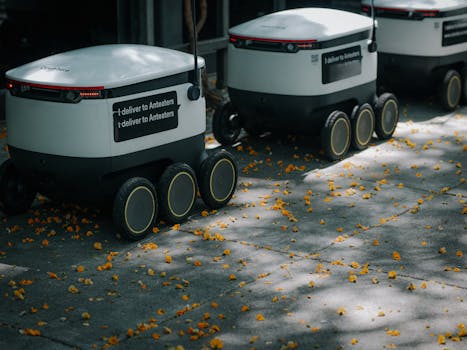
The Future of Autonomous Vehicles: AI in Transportation
The world stands on the brink of a transportation revolution, with artificial intelligence (AI) poised to transform how we move from place to place. Autonomous vehicles (AVs)—cars, trucks, buses, and even drones that can navigate without human intervention—are no longer the stuff of science fiction. They are rapidly becoming a reality, promising profound changes for society, industry, and the global economy. But what exactly does the future hold for autonomous vehicles, and how is AI driving this transformation in transportation?
AI: The Brain Behind Autonomous Vehicles
At the heart of every autonomous vehicle is a sophisticated suite of AI technologies. These systems are responsible for perceiving the environment, making decisions, and executing driving tasks—all without direct human input. AI enables AVs to process massive amounts of data from sensors like lidar, radar, cameras, and GPS in real time.
For example, Google's Waymo autonomous vehicles process over one gigabyte of sensor data per second to navigate complex urban environments. Deep learning algorithms help the vehicle identify pedestrians, cyclists, traffic signals, and other vehicles, making split-second decisions that mimic, and in some cases surpass, human judgment.
.png)
Key AI technologies in AVs include:
- Computer vision: Allows vehicles to "see" and interpret their surroundings. - Sensor fusion: Combines inputs from multiple sensors for a comprehensive environmental understanding. - Path planning: Determines the safest and most efficient route. - Machine learning: Continuously adapts to new scenarios and improves performance over time.According to the International Transport Forum, integrating AI into vehicles could reduce traffic accidents by up to 90%, as over 90% of road accidents are caused by human error. This integration highlights just how pivotal AI is to the future of safe, reliable transportation.
Levels of Autonomy: Where Are We Now?
Not all autonomous vehicles are created equal. The Society of Automotive Engineers (SAE) defines six levels of vehicle automation, ranging from Level 0 (no automation) to Level 5 (full automation with no human intervention required).
| SAE Level | Description | Human Role | In Market? |
|---|---|---|---|
| Level 0 | No Automation | Full control at all times | Yes |
| Level 1 | Driver Assistance | Driver controls most tasks; some assistive features | Yes |
| Level 2 | Partial Automation | Driver monitors system, but some tasks automated | Yes |
| Level 3 | Conditional Automation | Vehicle handles most tasks; driver intervenes if needed | Limited |
| Level 4 | High Automation | No intervention in specific conditions/geofenced areas | Testing |
| Level 5 | Full Automation | No driver needed at any time | Prototype |
Most vehicles on the road today offer Level 2 features, such as Tesla’s Autopilot and GM’s Super Cruise, which automate steering and acceleration but still require driver supervision. Companies like Waymo and Cruise are piloting Level 4 robotaxi services in select cities. Full Level 5 autonomy remains a technological challenge, with wide-scale deployment expected later in the 2030s.
AI-Driven Benefits: Safety, Efficiency, and Accessibility
The potential benefits of AI-powered autonomous transportation are vast, touching nearly every aspect of society.
1. $1 The World Health Organization reports there are 1.35 million road traffic deaths globally each year. AI can dramatically reduce this number by eliminating distractions, fatigue, and impaired driving—factors responsible for most accidents. 2. $1 AI can optimize routes, reduce traffic congestion, and smooth traffic flow. According to a McKinsey report, widespread AV adoption could cut urban travel time by 40% and reduce traffic congestion by 30%. 3. $1 Autonomous vehicles can offer newfound independence to people who are unable to drive, such as the elderly and disabled. The U.S. Department of Transportation estimates that 25.5 million Americans have travel-limiting disabilities, many of whom could benefit from AV technology. 4. $1 By optimizing driving patterns and enabling shared mobility, AVs can significantly lower fuel consumption and emissions. A 2022 study from the University of California, Davis found that shared, electric autonomous vehicles could reduce greenhouse gas emissions from transportation by as much as 80% by 2050.The Roadblocks: Challenges to Widespread Adoption
Despite AI’s promise, significant challenges remain before autonomous vehicles become mainstream.
- $1 Achieving reliable Level 5 autonomy requires AI to master rare and unpredictable driving scenarios, such as complex weather conditions or unusual road hazards. Training AI models for these "edge cases" is difficult and requires vast amounts of high-quality data. - $1 Autonomous vehicles raise complex legal questions. Who is responsible in the event of an accident—the manufacturer, the software developer, or the passenger? Regulatory frameworks are evolving, but standards vary widely between countries and even states. - $1 As vehicles become more connected, they are increasingly vulnerable to hacking. In 2015, security researchers demonstrated the ability to remotely control a Jeep Cherokee’s brakes and steering, highlighting the need for robust AI-driven cybersecurity measures. - $1 Surveys show that over 60% of Americans are hesitant to ride in a fully autonomous vehicle. Building public confidence will require transparent safety records, user education, and gradual exposure to the technology.AI and the Future of Mobility: Beyond the Private Car
AI’s influence on transportation goes far beyond personal vehicles. Autonomous technology is reshaping the broader mobility ecosystem:
- $1 Cities like Singapore and Phoenix are piloting self-driving buses and shuttles to increase efficiency and reduce operating costs. - $1 Companies such as TuSimple and Aurora are testing autonomous trucks on highways. The American Trucking Associations estimates the industry could face a shortage of 160,000 drivers by 2030, making AI-driven trucks a potential solution. - $1 AI-powered drones are being used for last-mile deliveries, medical supply transport, and even passenger flights. In 2023, Zipline’s autonomous drones completed over 300,000 commercial deliveries in Africa and the U.S. - $1 Ride-hailing services like Uber and Lyft are investing heavily in autonomous fleets, aiming to lower costs and increase availability. According to Statista, the global autonomous vehicle market could reach $62 billion by 2026, much of it driven by shared mobility.Preparing for an Autonomous Future: Societal and Economic Implications
The shift to AI-powered autonomous vehicles will have profound societal and economic effects.
- $1 The U.S. Bureau of Labor Statistics notes that over 3.5 million Americans work as truck drivers. While AVs may reduce demand for traditional driving jobs, they will also create opportunities in AI development, data analysis, fleet management, and vehicle maintenance. - $1 Cities will need to rethink infrastructure. With fewer private cars, there could be less demand for parking lots and more space for parks, bike lanes, and pedestrian areas. - $1 As liability shifts from drivers to manufacturers and software providers, insurance models will evolve, potentially lowering premiums as accident rates drop. - $1 Policymakers must ensure that autonomous mobility benefits all segments of society, not just those in affluent urban areas. Equitable deployment will require thoughtful planning and inclusive design.Shaping Tomorrow: The Enduring Impact of AI in Transportation
AI is set to revolutionize transportation in ways that will touch every aspect of our lives. From safer streets and cleaner air to increased accessibility and economic transformation, the potential is immense. Yet, realizing this vision will require collaboration between governments, industry, and the public. Addressing technical, regulatory, and ethical challenges is essential as we steer toward a future where autonomous vehicles are a common sight on our roads—and in our skies.
The next decade will be crucial. As AI continues to advance and public acceptance grows, the promise of autonomous vehicles is moving from fiction to fact. The journey ahead is complex but filled with opportunity, and it is clear that AI will remain the engine driving the future of transportation.