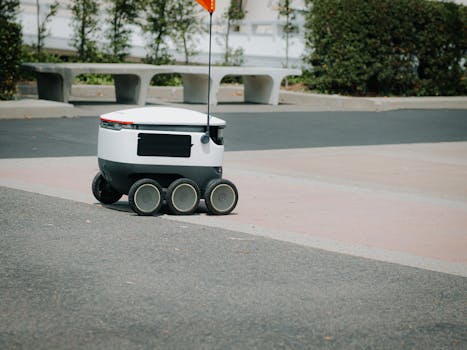
Artificial Intelligence (AI) is transforming the automotive industry in profound ways, reshaping how vehicles are designed, manufactured, and operated. As we move further into the 21st century, the integration of AI technologies is not just an option but a necessity for automakers who wish to stay competitive and meet the evolving demands of consumers and regulatory bodies.
One of the most significant impacts of AI in the automotive sector is in the realm of autonomous vehicles. Self-driving cars, once a futuristic dream, are now becoming a reality thanks to AI. These vehicles rely on complex algorithms and machine learning models to interpret their surroundings, make decisions, and learn from new experiences without human intervention. Companies like Tesla, Waymo, and Uber are at the forefront of this revolution, continuously refining their AI systems to improve safety and efficiency.
AI is also revolutionizing the manufacturing process in the automotive industry. Robots equipped with AI capabilities are being used to assemble cars with high precision and speed, reducing human error and increasing productivity. These robots can adapt to different tasks and respond to changes in the production line in real-time, making the manufacturing process more flexible and efficient.
.png)
Furthermore, AI plays a crucial role in predictive maintenance for vehicles. By analyzing data from various sensors in a car, AI can predict when parts might fail or require maintenance. This not only helps in reducing the downtime of vehicles but also saves costs by addressing issues before they lead to more significant problems. For instance, AI-driven analytics can alert when a critical component like the engine or brakes shows signs of wear and needs inspection.
Another area where AI is making a mark is in enhancing the customer experience. Many automotive companies are using AI to provide personalized experiences to their customers. AI algorithms analyze customer data and preferences to offer tailored recommendations, such as suggesting car models that best fit their lifestyle and budget. Additionally, AI-powered virtual assistants in cars can learn from driver interactions to improve their functionality and provide more intuitive support.
AI is also instrumental in improving vehicle safety. Advanced driver-assistance systems (ADAS) like automatic braking, lane-keeping assist, and adaptive cruise control rely on AI to function effectively. These systems continuously learn from vast amounts of data they collect and are becoming better at predicting and reacting to potential hazards on the road.
Moreover, AI is helping automotive companies to become more environmentally friendly. AI algorithms optimize fuel efficiency and can reduce emissions by analyzing driving patterns and suggesting more efficient routes. Electric vehicle (EV) manufacturers use AI to improve battery performance and longevity, which is crucial for the broader adoption of EVs.
The integration of AI in the automotive industry also poses challenges, including ethical considerations, data security, and the need for significant investment in technology and training. As AI systems become more autonomous, determining liability in the event of accidents involving self-driving cars becomes complex. Additionally, as cars collect and process more personal data, ensuring the security and privacy of this data is paramount.
Despite these challenges, the potential benefits of AI in the automotive industry are immense. Automakers that embrace AI technology can expect to see significant improvements in efficiency, safety, and customer satisfaction. As AI continues to evolve, it will undoubtedly unlock new possibilities and drive further innovation in the automotive sector.
In conclusion, AI is not just revolutionizing the automotive industry; it is setting the stage for a future where smart, efficient, and sustainable vehicles are the norm. As we continue to witness these advancements, it is clear that AI will play a pivotal role in shaping the future of transportation.