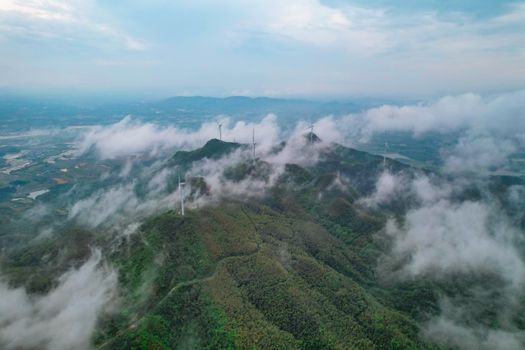
AI’s Impact on Weather and Climate Change Prediction: New Technologies for Nature Protection
Weather and climate play a critical role in shaping ecosystems, economies, and our daily lives. As the effects of climate change intensify—manifesting in extreme weather events, rising sea levels, and shifting ecological patterns—the need for accurate, timely weather and climate predictions has never been more urgent. Traditional forecasting methods, while powerful, are being transformed by artificial intelligence (AI), which is bringing new levels of precision and speed to the science of atmospheric prediction. AI is not just making forecasts better—it is fundamentally changing how we protect nature and respond to global environmental challenges.
The Growing Challenge: Why Accurate Weather and Climate Predictions Matter
The financial and human costs of inaccurate weather and climate predictions are staggering. According to the World Meteorological Organization, weather-related disasters caused $313 billion in economic losses worldwide in 2022 alone. In the United States, the National Centers for Environmental Information recorded 18 climate disasters each causing over $1 billion in damages in 2022.
.png)
Accurate, timely forecasts are vital for disaster preparedness, agriculture, water resources management, and biodiversity conservation. Traditional weather prediction relies on numerical weather prediction (NWP) models—complex mathematical simulations of atmospheric physics. While these models have evolved, they struggle with limitations:
- High computational requirements: Some global models take hours to run on supercomputers. - Limited resolution: Many models cannot capture local-scale phenomena, such as flash floods or urban heat islands. - Data bottlenecks: Massive volumes of weather data can overwhelm traditional analysis methods.AI is breaking these barriers, ushering in a new era for nature protection and climate resilience.
AI Algorithms: Transforming Weather Forecasting at Every Scale
Artificial intelligence, especially machine learning (ML) and deep learning (DL), excels at identifying patterns and relationships within massive, complex datasets. In weather prediction, AI algorithms are now being used to:
1. $1: Google’s DeepMind developed “GraphCast,” an AI model that can generate 10-day global weather forecasts in under one minute—2000 times faster than conventional NWP models like ECMWF’s Integrated Forecasting System. 2. $1: IBM’s “GRAF” (Global High-Resolution Atmospheric Forecasting System) uses AI to deliver hyper-local forecasts at a 3-kilometer resolution, updating hourly. This is particularly useful for predicting severe thunderstorms, tornadoes, and flash floods. 3. $1: AI helps integrate diverse sources—satellites, radar, sensors, social media—enabling real-time updates and improving prediction accuracy for rapidly changing events.These breakthroughs mean that communities can receive earlier warnings for hurricanes, farmers can optimize planting schedules, and conservationists can monitor habitats more effectively.
Revolutionizing Climate Change Modeling with AI
Climate change prediction involves modeling complex Earth systems over decades or centuries. Traditional climate models (such as those used by the IPCC) simulate the interactions between atmosphere, oceans, land, and ice. These models are computationally expensive and often struggle with uncertainties in regional impacts.
AI is addressing these challenges by:
- $1: Machine learning algorithms refine coarse-resolution global models into high-resolution regional predictions, crucial for local adaptation planning. For example, Microsoft’s “Project Premonition” integrates AI to generate local climate impact scenarios, helping cities prepare for heatwaves or flooding. - $1: AI can reconstruct historical climate data from sparse observations, improving understanding of past events and enhancing model training. - $1: Deep learning can identify novel climate patterns or “tipping points” in massive simulation outputs. In 2023, researchers at MIT used neural networks to detect early signs of abrupt climate shifts, offering more lead time for mitigation.The combination of AI and traditional modeling is producing more actionable, location-specific insights for nature protection.
Real-World Applications: Nature Protection in Action
AI-powered weather and climate prediction is already making a tangible difference in the fight to protect nature:
- $1: AI models, such as those used by California’s Department of Forestry and Fire Protection, analyze weather, vegetation, and topography data to forecast wildfire risks and optimize firefighting resources. In 2022, this approach helped reduce average wildfire response times by 20%. - $1: Conservationists use AI-enhanced climate forecasts to identify vulnerable habitats, predict migration shifts, and design protected areas resilient to future climate scenarios. - $1: The Red Cross and Red Crescent societies use AI-driven forecasts to trigger pre-emptive evacuations and resource deployment, reducing casualties during cyclones and floods. - $1: In India, AI-powered weather alerts helped more than 1.5 million farmers adjust planting schedules, preventing significant crop losses during erratic monsoon seasons.These examples demonstrate how AI is translating improved prediction into real-world nature protection outcomes.
Comparing Traditional vs. AI-Enhanced Weather and Climate Prediction
The following table summarizes key differences between conventional prediction approaches and new AI-driven methods:
| Aspect | Traditional Methods | AI-Enhanced Methods |
|---|---|---|
| Computation Time | Several hours (for global forecasts) | Under 1 minute (GraphCast, DeepMind) |
| Spatial Resolution | 10-50 km (global), limited local detail | As fine as 1-3 km (IBM GRAF, local models) |
| Data Sources | Primarily physical sensors, satellites | Multi-source: sensors, social media, IoT, drones |
| Prediction Accuracy | High for large-scale trends, less for local events | Improved for local, extreme, and rare events |
| Operational Cost | Very high (requires supercomputers) | Lower (runs efficiently on cloud or GPUs) |
Ethical, Social, and Environmental Considerations
AI’s integration into weather and climate science raises important questions:
- $1: While AI models can democratize prediction, there is a risk that low-income regions without data infrastructure or technical expertise may be left behind. Initiatives like the “AI for Earth” program are working to bridge this gap, supporting projects in over 100 countries. - $1: AI models often ingest personal or sensitive data (such as mobile location during disasters), requiring robust privacy safeguards. - $1: Training large AI models consumes significant energy; for example, a single deep learning model can emit as much carbon as five cars in their lifetime. Efforts are underway to develop more efficient algorithms and use renewable energy for training.Responsible AI development is essential to ensure that these technologies protect both people and the planet.
The Future of AI in Weather and Climate Protection
The pace of AI innovation in environmental prediction shows no sign of slowing. Key trends to watch include:
- $1: Ultra-fast, low-power AI chips embedded in weather stations or drones could enable real-time, localized predictions even in remote areas. - $1: This technique allows models to learn from distributed datasets without sharing sensitive information, improving privacy and inclusivity. - $1: Combining AI with crowdsourced observations—such as smartphone weather apps—can enhance model accuracy and engage the public in nature protection. - $1: The United Nations aims to ensure every person on Earth is protected by an early warning system by 2027, a goal that will rely heavily on AI-enhanced prediction.Ultimately, AI’s greatest potential lies in empowering decision-makers—from local farmers to global policymakers—to take timely, data-driven action to safeguard the natural world.