As we navigate the complexities of daily life, the kitchen remains a sanctuary of creativity and familial bond. However, the need for efficiency in meal preparation has never been more pronounced. Artificial Intelligence (AI) is stepping up, transforming our culinary practices by streamlining the cooking process, making it not only quicker but also more enjoyable.
AI’s role in the kitchen is not to overshadow traditional cooking but to enhance it by alleviating the more tedious aspects of food preparation. This integration of technology ranges from intelligent appliances to AI-driven cooking assistants, each designed to simplify various cooking tasks.
Personalized Meal Planning and Recipe Optimization
.png)
A standout feature of AI in the kitchen is its ability to assist in meal planning and recipe selection. By analyzing factors such as dietary restrictions, available ingredients, and personal preferences, AI systems can propose tailored recipes. This capability not only saves preparation time but also minimizes food waste, suggesting dishes that make the most of the ingredients already in your kitchen.
Smart Cooking Appliances
The advancement in smart kitchen devices is another area where AI shines. For instance, intelligent ovens can automatically adjust cooking temperatures and durations to achieve perfect culinary results. Some are even equipped with internal cameras and AI algorithms that monitor your food’s progress, notifying you precisely when it’s cooked to perfection. This precision not only guarantees delicious meals but also simplifies the cooking process.
Automation of Repetitive Tasks
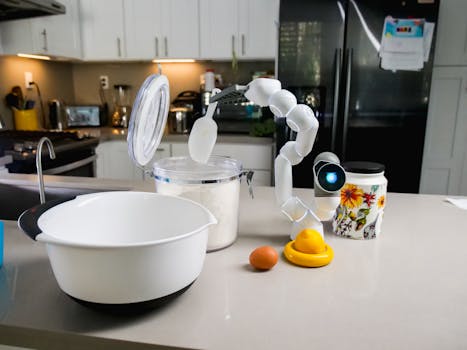
AI also promises relief from repetitive and labor-intensive kitchen tasks. Robotic kitchen assistants can handle everything from chopping vegetables to stirring stews, freeing up home cooks to concentrate on the finer aspects of meal preparation like seasoning and artistic plating.
Educational Tools for All Skill Levels
Beyond simplifying physical tasks, AI fosters culinary learning and experimentation. Various AI-enhanced cooking apps and platforms offer guided, step-by-step cooking instructions, adjusting the complexity based on the cook’s experience level. This personalized guidance is beneficial for beginners and experienced cooks alike, making the learning process more adaptive and enjoyable.
Professional Kitchen Integration
In professional settings, chefs are turning to AI for more than just cooking. AI technologies help manage kitchen inventory, streamline order processing, and reduce operational waste, enhancing efficiency in high-pressure culinary environments.
Challenges and Considerations
Despite these benefits, the integration of AI into cooking practices is not without its challenges. Privacy concerns are paramount, as smart kitchen devices often collect extensive data about users' habits and preferences. Moreover, the cost of AI-equipped kitchen technology can be prohibitive, and there is a learning curve associated with adopting new gadgets.
Conclusion
The fusion of AI with culinary practices offers a mixed bag of efficiency, personalization, and innovation, turning routine meal preparation into an engaging experience. As AI technology continues to evolve, it is poised to introduce even more groundbreaking tools to our kitchens.
Whether you’re a time-strapped professional in need of quick, healthy meals or a cooking enthusiast eager to explore new recipes, AI in the kitchen is a supportive ally. This exciting convergence of technology and traditional cooking heralds a new era of culinary adventure and efficiency, promising to enrich our cooking experiences in myriad ways.