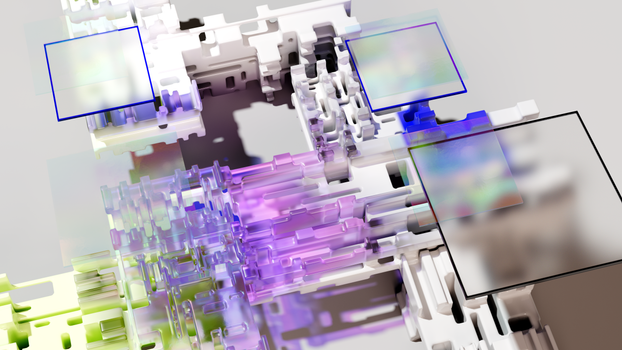
The incorporation of Artificial Intelligence (AI) into the spheres of modern art and design is not just a trend but a significant evolution, changing how creatives conceive and execute their visions. As AI continues to develop, its integration into these fields is becoming more profound and impactful, presenting a mix of opportunities and challenges that artists and designers must navigate.
AI's Impact on Modern Art
AI is transforming modern art by serving both as a tool and a medium. This dual role enables artists to explore new creative territories. AI algorithms can process and analyze massive datasets to create unique visual elements, introducing a level of complexity and innovation previously unattainable. Artists like Mario Klingemann use generative adversarial networks (GANs) to produce artworks that maintain a dialogue between the creator and the technology, questioning the traditional artist-medium relationship.
.png)
These technologies facilitate a form of co-creation where AI contributes actively to the creative process, offering artists a new lens through which to view their work. This partnership can result in artworks that reflect a combination of human emotion and computational power, pushing the boundaries of traditional artistic expression.
AI's Role in Design
In design, AI's influence is reshaping workflows and outcomes. AI tools assist in automating tasks such as selecting color schemes, arranging layouts, and proposing design modifications, which streamlines the design process and allows designers to focus more on creative aspects. In product design, AI's ability to anticipate consumer preferences and simulate product performance under various scenarios helps designers create more functional and appealing products while reducing development time and costs.
AI-driven design tools are becoming indispensable in addressing complex design challenges, enabling designers to achieve higher precision and efficiency. This not only enhances the aesthetic appeal of products but also ensures they meet market demands effectively.
Ethical Considerations and Challenges
The integration of AI in art and design raises significant ethical issues, primarily concerning originality and authorship. The question of who holds the copyright to AI-generated art or design complicates traditional concepts of ownership and creativity. This dilemma necessitates a reevaluation of copyright laws to consider the implications of AI-generated content.
Moreover, there's a risk of stylistic uniformity if AI tools are trained on limited or biased datasets. Such scenarios could potentially undermine diversity and innovation in creative fields, as AI might continually propagate prevailing styles and trends without introducing new ideas.
Looking Forward
The future of AI in art and design looks promising, with potential advancements leading to more personalized and interactive experiences. In art, AI could adapt artworks based on viewer reactions, creating deeply immersive and responsive experiences. In design, AI might enhance sustainable practices by optimizing resource use and production methods, contributing to more environmentally friendly products.
Moreover, with the progression of virtual and augmented reality technologies, AI could play a pivotal role in developing more engaging and immersive design interfaces, transforming how users interact with digital environments.
Conclusion
AI is undeniably redefining the landscapes of art and design, offering innovative tools that enhance creativity and efficiency. While this integration presents challenges, particularly in ethics and cultural diversity, it also offers immense opportunities for growth and innovation. Ongoing collaboration between artists, designers, and technologists is crucial to ensure that AI serves as an enhancement, not a replacement, of human creativity. This collaborative approach will be essential in leveraging AI's full potential in art and design, fostering an environment where technology complements artistic vision and innovation thrives.